What Is the Difference Between a Private Investigator and a Detective?
When people need answers to sensitive personal, professional, or business-related questions, they often consider hiring a private investigator or a detective. Although these terms are frequently used interchangeably, there are important differences between the two roles, particularly when it comes to their authority, responsibilities, employment, and the types of investigations they conduct.
The main difference between a private investigator and a detective is that a private investigator is generally an independently employed professional or someone working for a private investigation firm, whereas a detective is commonly a police officer assigned to investigate criminal activities. Private investigators work for individuals, businesses, insurance providers, and legal professionals, while police detectives investigate suspected offences on behalf of law enforcement agencies.
Understanding these differences can help you decide which professional is appropriate for your situation. Whether you require assistance with suspected fraud, employee misconduct, missing persons, relationship concerns, or corporate matters, choosing the right investigation professional is essential.
What Is a Private Investigator?
A private investigator (PI) is a licensed professional engaged by individuals, organisations, businesses, or legal representatives to gather information, conduct enquiries, monitor activities, and collect evidence relating to specific matters.
Private investigators generally operate independently or work through private investigation companies. Their assignments can involve personal, financial, insurance, workplace, and corporate investigations.
Unlike police detectives, private investigators are usually engaged by private clients who need reliable information about a particular situation. They use lawful investigative techniques, including surveillance, interviews, background enquiries, public record research, and evidence analysis.
Some common responsibilities of private investigators include:
- Conducting surveillance and documenting relevant activities.
- Investigating suspected insurance fraud.
- Locating missing persons and tracing individuals.
- Investigating workplace misconduct and employee dishonesty.
- Gathering evidence for family law and civil matters.
- Conducting background checks and due diligence enquiries.
- Investigating financial irregularities and suspected fraud.
- Preparing professional investigation reports for clients.
Professional private investigators must operate within applicable state and territory legislation, licensing requirements, and privacy laws.
What Is a Detective?
A detective is generally a trained law enforcement officer responsible for investigating suspected criminal activities. Detectives work within police departments or other authorised law enforcement agencies and investigate offences that may require detailed enquiries, evidence collection, witness interviews, and coordination with other investigative teams.
Their primary responsibility is to investigate potential criminal offences and help establish whether sufficient evidence exists to support legal proceedings.
Detectives may specialise in different areas of criminal investigation, depending on their experience, training, and department responsibilities.
Their common duties include:
- Investigating theft, assault, and other criminal offences.
- Interviewing witnesses, victims, and suspects.
- Examining crime scenes and coordinating forensic investigations.
- Collecting and analysing evidence.
- Identifying and locating suspects.
- Preparing criminal investigation reports.
- Working with prosecutors and other law enforcement professionals.
- Building evidence briefs for potential court proceedings.
Police detectives have specific statutory powers that private investigators generally do not possess. However, these powers are subject to legal requirements, police procedures, and applicable legislation.
What Is the Difference Between a Private Investigator and a Detective?
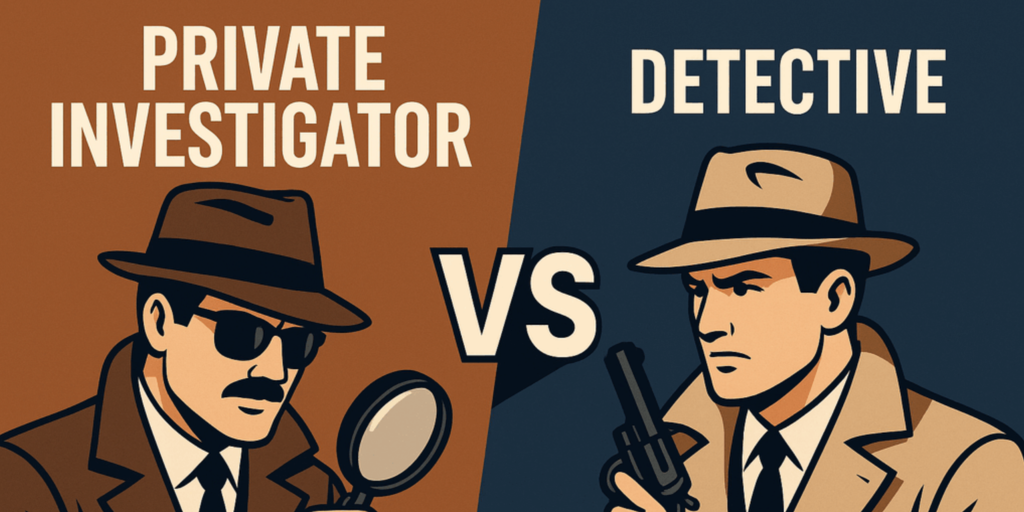
The primary distinction between these professionals is their employment, purpose, legal authority, and the type of work they undertake.
A private investigator is engaged by a private client to conduct lawful investigations and gather information. A police detective works within law enforcement and investigates suspected criminal offences.
Here is a comparison of their main differences:
| Comparison | Private Investigator | Police Detective |
| Employment | Private investigation firm or independent business | Police or law enforcement agency |
| Primary clients | Individuals, businesses, insurers, and legal professionals | Public and government authorities |
| Main responsibilities | Private, civil, commercial, and personal investigations | Criminal investigations |
| Legal authority | Limited to lawful investigative activities | Specific statutory police powers |
| Surveillance | Conducted within applicable laws | Conducted under relevant police powers and legal procedures |
| Arrest powers | No general police arrest powers | Police arrest powers where legally authorised |
| Evidence collection | Collects information and evidence for clients | Collects evidence for criminal investigations |
| Investigation purpose | Establishing facts for private matters | Investigating suspected criminal offences |
| Reporting | Reports findings to clients | Reports findings through law enforcement procedures |
Although their responsibilities may sometimes overlap, their professional roles and legal authority are different.
1. Differences in Employment and Professional Responsibilities
One of the most noticeable differences between a private investigator and a detective is who employs them.
Private investigators generally work for private investigation businesses or operate independently. Their services are available to individuals, companies, insurance providers, and legal representatives who require assistance with specific matters.
For example, a business owner may engage a private investigator to investigate suspected employee misconduct, while an individual may require assistance locating a missing family member.
Detectives, on the other hand, work for law enforcement agencies. They are assigned cases involving suspected criminal activities and operate under police procedures and applicable legislation.
Their investigations may involve serious offences, criminal intelligence, witness interviews, and coordination with forensic specialists.
2. Differences in Legal Powers and Authority
Legal authority is another important distinction between private investigators and police detectives.
Police detectives have specific powers under applicable legislation. Depending on the circumstances and jurisdiction, these may include exercising lawful arrest powers, executing warrants, and using authorised investigative powers.
Private investigators do not automatically have these powers simply because they are licensed.
A private investigator cannot independently issue search warrants, access private records without proper authority, or impersonate a police officer. They must conduct their investigations using lawful methods and respect privacy, surveillance, and other relevant legal restrictions.
For example, a private investigator may conduct lawful surveillance to document relevant activities, but this does not give them unrestricted access to someone’s private property or communications.
Understanding these boundaries is important when choosing an investigation professional.
3. Differences in the Types of Investigations
Private investigators and detectives may investigate different types of matters.
Private investigators commonly handle assignments involving personal, corporate, financial, insurance, and civil matters. Their work is often focused on gathering information for clients who need evidence to make informed decisions or support legal proceedings.
Police detectives primarily investigate suspected criminal offences, including theft, assault, fraud, and other matters within their jurisdiction.
For instance, a company concerned about possible internal misconduct may engage a private investigator to conduct an independent workplace investigation. If the investigation identifies evidence suggesting criminal activity, the matter may be referred to the police.
This distinction helps explain why private investigation services are valuable even when police involvement is not required or appropriate.
4. Can a Private Investigator Investigate Criminal Activities?
A common question is whether private investigators can investigate criminal activities.
Private investigators can lawfully gather information relating to suspected criminal conduct within the limits of their licence and applicable legislation. However, they do not replace police detectives or have the same enforcement authority.
For example, a private investigator may investigate suspected employee theft, document relevant activities, collect available evidence, and prepare a report for the client or their legal representative.
If the information indicates that a criminal offence may have occurred, the client may provide the evidence to the relevant law enforcement agency.
Private investigators must not interfere with police investigations, unlawfully obtain evidence, or attempt to exercise powers reserved for authorised authorities.
5. What Types of Services Do Private Investigators Provide?
Private investigators offer a range of services depending on their licensing, experience, and investigative capabilities.
Individuals and organisations may require professional assistance when they cannot independently establish the facts surrounding a particular situation.
Common private investigation services include:
Personal Investigations
Personal investigations may involve relationship concerns, suspected infidelity, missing persons, and other sensitive matters. Investigators use appropriate enquiries and lawful surveillance methods to establish relevant facts.
Corporate Investigation Services
Businesses sometimes face internal challenges that require independent investigation. These may include suspected employee misconduct, workplace disputes, fraudulent activities, information leaks, and financial irregularities.
Professional corporate investigation services can help organisations obtain documented information and assess concerns through structured investigative processes.
Insurance Investigations
Insurance-related investigations may involve suspicious claims, suspected fraudulent activities, staged incidents, and inconsistencies in submitted information.
Investigators gather relevant information and prepare reports that can assist insurance professionals in assessing claims.
Background Checks and Due Diligence
Background enquiries can help businesses and individuals assess information relating to potential employees, business partners, contractors, or other relevant parties.
The scope of these checks depends on the available information, lawful access, and the purpose of the enquiry.
Missing Persons Investigations
Private investigators may assist with locating individuals who have become difficult to contact or whose whereabouts are unknown. Their work may involve reviewing available records, conducting enquiries, and following relevant information.
6. Do You Need a Former Police Detective to Become a Private Investigator?
No. Becoming a private investigator does not automatically require someone to have previously worked as a police detective.
Private investigation is a separate professional occupation with its own licensing, training, and regulatory requirements.
The Australian Bureau of Statistics recognises private investigators as a distinct occupation involving investigations into legal, financial, and personal matters, including evidence preparation for court proceedings.
A professional investigator needs relevant knowledge, investigative skills, attention to detail, communication abilities, and an understanding of applicable laws.
Previous police or law enforcement experience may be beneficial in certain situations, but it is not a universal requirement for entering the private investigation profession.
7. How to Choose Between a Private Investigator and a Detective?
Choosing between a private investigator and a detective depends primarily on the nature of your situation.
If you believe a criminal offence has occurred, contacting the police is generally the appropriate starting point. Police detectives are responsible for investigating suspected crimes and exercising authorised law enforcement powers.
However, if you require independent assistance with a personal, insurance, workplace, corporate, or civil matter, a private investigator may be more appropriate.
Consider the following situations:
- Suspected criminal activity: Contact the police or relevant law enforcement agency.
- Employee misconduct: Consider engaging a professional private investigator.
- Relationship concerns: A licensed private investigator may assist with lawful enquiries.
- Insurance claim concerns: An investigator may gather relevant information and documentation.
- Corporate fraud concerns: Consider an appropriate corporate investigation.
- Missing persons: Depending on the circumstances, contact the police or engage a suitably licensed private investigator.
Before engaging an investigator, check their relevant licence, experience, proposed investigative methods, confidentiality arrangements, and reporting process.
Why Choose ProFact for Professional Investigation Services?
When you need reliable information about a sensitive personal or business matter, working with an experienced investigation provider is important.
ProFact provides professional private investigation services to assist individuals and organisations with a range of investigative requirements. Its approach focuses on gathering relevant information, conducting appropriate enquiries, and preparing documented findings to support informed decisions.
With the relevant licensing credentials, ProFact operates under NSW Security Master Licence #000111294.
Whether you require assistance with personal investigations, surveillance, insurance matters, missing persons, or corporate enquiries, choosing an investigation provider that understands legal requirements and professional responsibilities is essential.
ProFact can discuss your circumstances, assess the scope of your enquiry, and explain the appropriate investigative approach before work begins.
Need professional investigation assistance?
Contact ProFact on 1300 464 810 to discuss your requirements and schedule an appointment.
Frequently Asked Questions
1. Is a private investigator the same as a detective?
No. Although the terms are sometimes used interchangeably, they generally describe different professional roles. A private investigator works for private clients and handles personal, corporate, civil, and commercial enquiries. A police detective is a law enforcement officer who investigates suspected criminal offences.
2. Can a private investigator arrest someone?
No. Private investigators do not have general police arrest powers. They must operate within applicable laws and cannot exercise powers reserved for authorised law enforcement officers. Any limited citizen’s arrest provisions are separate from their professional role and depend on the relevant jurisdiction and circumstances.
3. Do private investigators work with the police?
Yes. Private investigators may provide information or documented evidence to police when their findings relate to suspected criminal activities. However, they operate independently and do not replace police detectives or control official criminal investigations.
4. Do private investigators need a licence in Australia?
Private investigation licensing requirements vary between Australian states and territories. Individuals and businesses must hold the appropriate licence or authorisation for the activities they undertake. Before hiring an investigator, clients should verify that the provider holds the relevant current licence for the required services.
5. When should I hire a private investigator instead of contacting the police?
You may consider hiring a private investigator when you need independent assistance with a personal, corporate, workplace, insurance, or civil matter that does not necessarily require police intervention. If you are reporting a crime, facing an immediate safety risk, or need law enforcement powers, contact the police first.
Final Thoughts
The difference between a private investigator and a detective mainly comes down to their professional responsibilities, employment, investigative purpose, and legal authority.
Private investigators assist individuals and organisations with private, corporate, insurance, and civil investigations, while police detectives investigate suspected criminal offences on behalf of law enforcement agencies.
Both roles involve gathering information, analysing evidence, and establishing facts, but they operate under different professional and legal frameworks.